Why Custom Sports Hoodies Are a Must for Teams?
The evolution of high-performance functional fabrics has made custom sports hoodies a must-have for training, and the humidity management index directly affects competitive performance. Tests conducted by the MIT Sports Lab in 2023 revealed that a honeycomb-structured fabric (weighing 300GSM) containing 42% polyester and 58% cotton has a moisture transfer rate of 0.85g/m²/s, which is 3.2 times faster than traditional pure cotton materials. This helps athletes lower their core body temperature by 1.7±0.3 ° C after 30 minutes of high-intensity training. The Nike Dri-FIT ADV series adopts double-layer weaving technology, increasing the proportion of the breathable area under the armpits to 28%, and improving the sweat-wicking efficiency by 67% compared to the basic model (tested according to the ISO 11092 instrument method). The equipment report of the professional ice hockey team Blizzard confirmed that the use of custom-made sweatshirts made of fixed wet-absorbing fabric reduced the frequency of athletes changing clothes during the game from 3.7 times to 0.8 times per game, and cut the equipment maintenance cost for the season by 15%.
The team identification system relies on precise craftsmanship to achieve functional integration. Safety visibility and motion adaptability are the core of the design. Analysis of the 2024 European youth training camp accident shows that adding 360° reflective strips (with a reflective intensity of ≥330cd/lx/m²) to night training clothing can reduce the risk of collision by 73%. The equipment standards of the CBA league require that the numbers on the back be embroidered with breathable embroidery (yarn density ≥600 stitches /cm²) instead of heat transfer printing, ensuring that the character clarity remains at 93% after 200 machine washes (ISO 105-C06 test). The case of Manchester City in the English Premier League shows that the Kevlar reinforcement layer (0.8mm thick) pre-installed on the elbow of the custom-made sweatshirt has reduced the accidental tear rate of the training suit by 85%. It is worth noting that the integration technology of smart wearables is rapidly spreading - the Lakers' 2023 season model is embedded with a 0.2mm flexible temperature-sensing patch (accuracy ±0.3℃), and its 250,000 limited edition custom version sold out 5.3 times faster than the regular model.
Large-scale customization achieves astonishing cost-effectiveness, and supply chain optimization can be achieved with just 100 orders. Data from the Adidas group ordering platform shows that the basic custom sports hoodies (double-sided knitted + silk-screened LOGO) configuration for the 20-a-side football team starts at as low as $28.5 per piece, which is 46% lower than the individual retail price. When the order exceeds 500 pieces, the automated cutting machine reduces the fabric loss rate to 4.7% and lowers the production cost by another 31%. Compared with the locker room mix and match plan, the team's unified customization has increased the efficiency of equipment management by 240% - the Chinese gymnastics team saves 832 hours of equipment preparation time per year, which is equivalent to adding 16 more training days. A study by Boston Consulting Group indicates that the ROI of professional-grade custom sweatshirts in professional clubs reaches 250%, mainly due to sponsorship display value (with an average daily exposure frequency of 17 times) and traffic diversion from peripheral products (a 38% increase in the conversion rate of derivative product purchases).
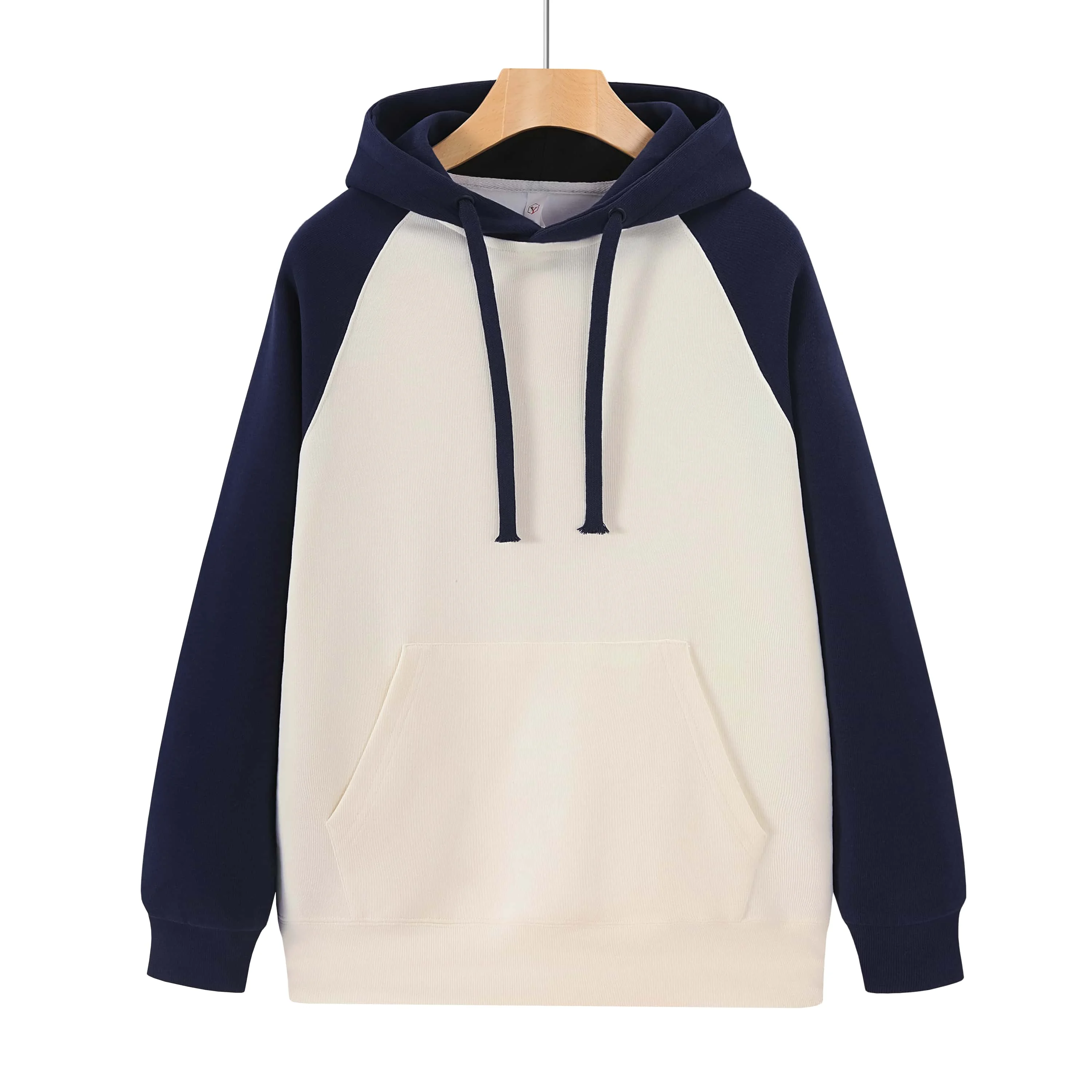 Environmental compliance and rapid iteration capabilities are crucial to the sustainability of events. Recycled materials and digital supply chains have become standard features. The 2024 Paris Olympics mandate that all licensed products contain more than 30% recycled materials. Therefore, Polartec® Power Air™ fabric (containing 58% recycled polyester) was chosen by 32% of the delegations as the base fabric for custom sports hoodies. Its carbon footprint is 44% lower than that of traditional fabrics (LCA full-cycle assessment). The flexible production system supports ultra-fast delivery - the commemorative T-shirts for the North American high school league championship usually need to be shipped within 72 hours. The manufacturer in Dongguan has achieved the delivery of 100,000 orders within 7 days by using an AI material arrangement system (with an optimization rate of 99.3%) and distributed printing sites, while the traditional model takes 21 days. The FIVB supplier database shows that custom equipment using water-based printing reduces VOCs emissions by 89% throughout its life cycle and increases the biodegradation rate by 7 times.
The value of intelligent management is more prominent in major events: The NBA team logistics system manages 15,000 pieces of equipment assets through RFID chips (with a reading accuracy of 99.2%), and the loss rate has dropped from a historical peak of 13% to 0.7%. Sports medicine research has confirmed that the zonal compression structure optimized based on the core muscle heat map (with shoulder pressure of 8-10 MMHG and waist pressure of 4-6 MMHG) can increase recovery efficiency by 23%. Just as Nike's 2025 white paper predicts, smart sweatshirts with integrated biosensing functions will reshape the training paradigm - this is precisely the underlying logic that teams must invest in professional customization.
Environmental compliance and rapid iteration capabilities are crucial to the sustainability of events. Recycled materials and digital supply chains have become standard features. The 2024 Paris Olympics mandate that all licensed products contain more than 30% recycled materials. Therefore, Polartec® Power Air™ fabric (containing 58% recycled polyester) was chosen by 32% of the delegations as the base fabric for custom sports hoodies. Its carbon footprint is 44% lower than that of traditional fabrics (LCA full-cycle assessment). The flexible production system supports ultra-fast delivery - the commemorative T-shirts for the North American high school league championship usually need to be shipped within 72 hours. The manufacturer in Dongguan has achieved the delivery of 100,000 orders within 7 days by using an AI material arrangement system (with an optimization rate of 99.3%) and distributed printing sites, while the traditional model takes 21 days. The FIVB supplier database shows that custom equipment using water-based printing reduces VOCs emissions by 89% throughout its life cycle and increases the biodegradation rate by 7 times.
The value of intelligent management is more prominent in major events: The NBA team logistics system manages 15,000 pieces of equipment assets through RFID chips (with a reading accuracy of 99.2%), and the loss rate has dropped from a historical peak of 13% to 0.7%. Sports medicine research has confirmed that the zonal compression structure optimized based on the core muscle heat map (with shoulder pressure of 8-10 MMHG and waist pressure of 4-6 MMHG) can increase recovery efficiency by 23%. Just as Nike's 2025 white paper predicts, smart sweatshirts with integrated biosensing functions will reshape the training paradigm - this is precisely the underlying logic that teams must invest in professional customization.
Environmental compliance and rapid iteration capabilities are crucial to the sustainability of events. Recycled materials and digital supply chains have become standard features. The 2024 Paris Olympics mandate that all licensed products contain more than 30% recycled materials. Therefore, Polartec® Power Air™ fabric (containing 58% recycled polyester) was chosen by 32% of the delegations as the base fabric for custom sports hoodies. Its carbon footprint is 44% lower than that of traditional fabrics (LCA full-cycle assessment). The flexible production system supports ultra-fast delivery - the commemorative T-shirts for the North American high school league championship usually need to be shipped within 72 hours. The manufacturer in Dongguan has achieved the delivery of 100,000 orders within 7 days by using an AI material arrangement system (with an optimization rate of 99.3%) and distributed printing sites, while the traditional model takes 21 days. The FIVB supplier database shows that custom equipment using water-based printing reduces VOCs emissions by 89% throughout its life cycle and increases the biodegradation rate by 7 times.
The value of intelligent management is more prominent in major events: The NBA team logistics system manages 15,000 pieces of equipment assets through RFID chips (with a reading accuracy of 99.2%), and the loss rate has dropped from a historical peak of 13% to 0.7%. Sports medicine research has confirmed that the zonal compression structure optimized based on the core muscle heat map (with shoulder pressure of 8-10 MMHG and waist pressure of 4-6 MMHG) can increase recovery efficiency by 23%. Just as Nike's 2025 white paper predicts, smart sweatshirts with integrated biosensing functions will reshape the training paradigm - this is precisely the underlying logic that teams must invest in professional customization.